

07 Oct Picking Materials that Age Well
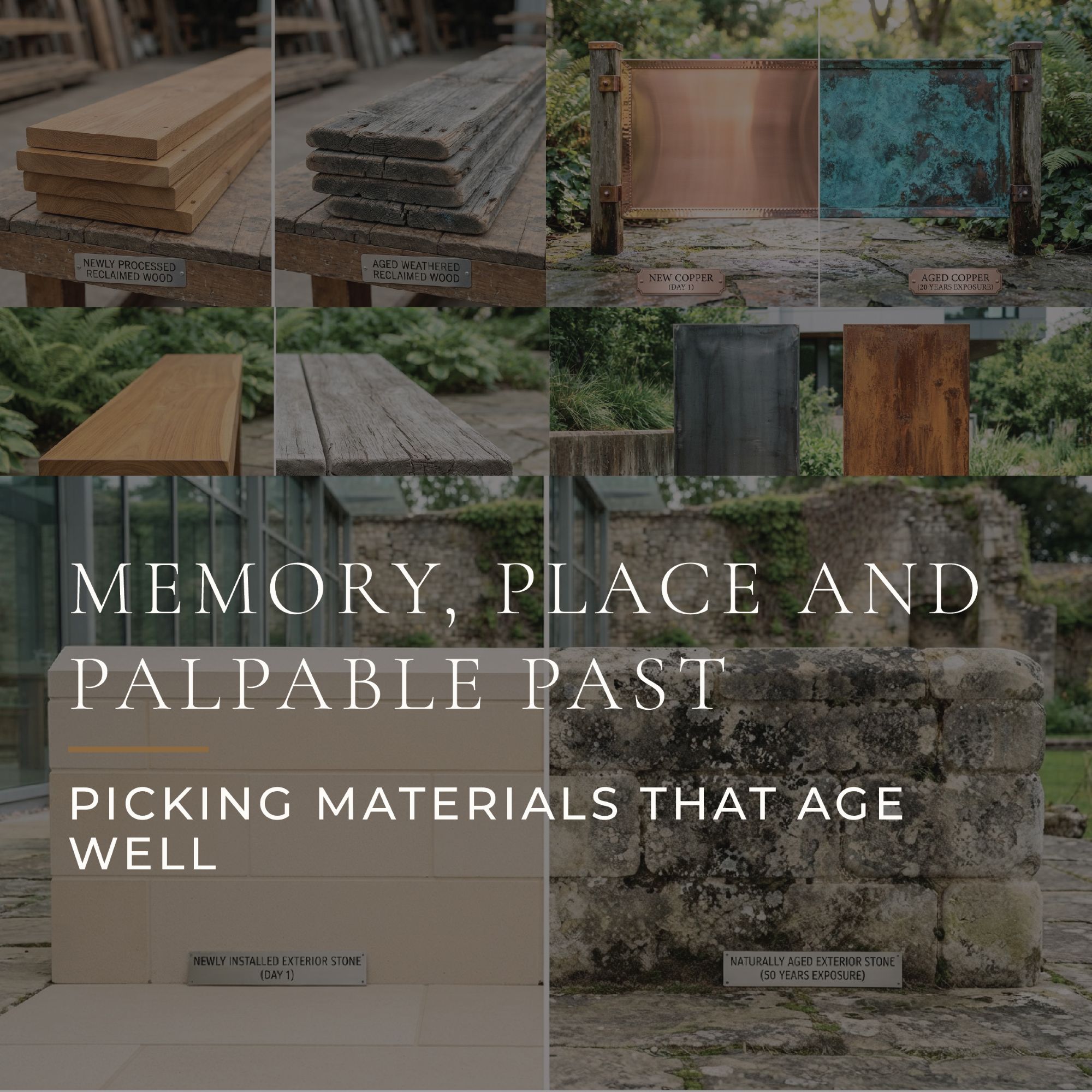
Some materials are at their best the day they are installed. Others are only getting started. When we choose finishes for a home, we try to ask a different question than how it will look at handover. We ask how it will look in ten years, in thirty, in the hands of the next owner.
The materials below are ones we return to again and again. They don’t resist time so much as work with it, and each one tends to look better for having been lived with.
Corten Steel
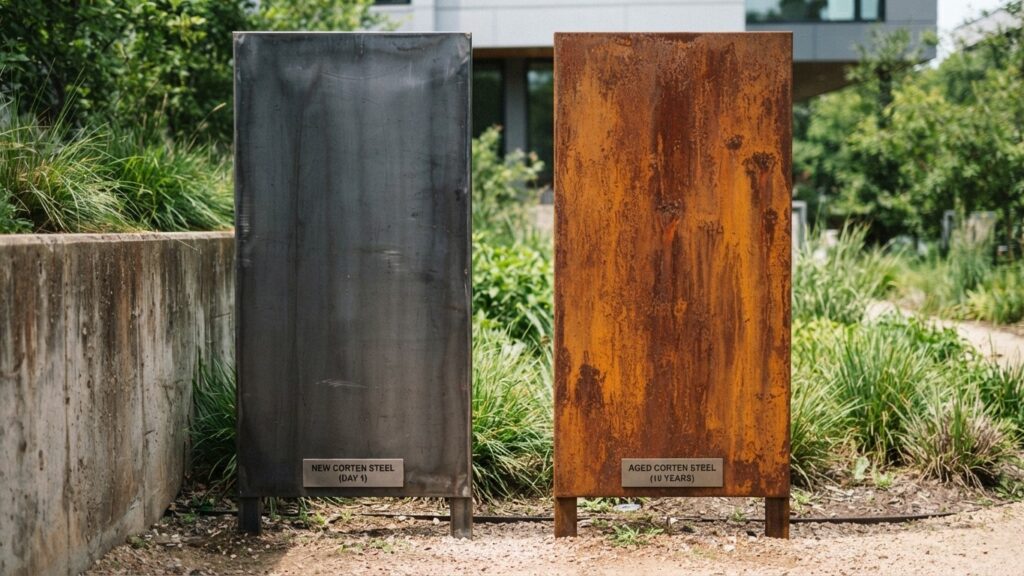
Corten is steel designed to rust, on purpose. The surface oxidizes into a tightly bonded layer of patina that seals the metal beneath it, which is why it needs no paint and very little upkeep. The color moves from bright orange toward a deep, velvety brown over the first few years, then settles.
We use it for exterior cladding, fascia, fireplace surrounds, gates, planters and landscape edging. It sits comfortably beside stone, concrete and warm wood. One detail worth planning for: in its early life, runoff can stain whatever sits below it, so drainage needs thought. In coastal air, where salt is part of the story, the detailing matters even more.
Teak
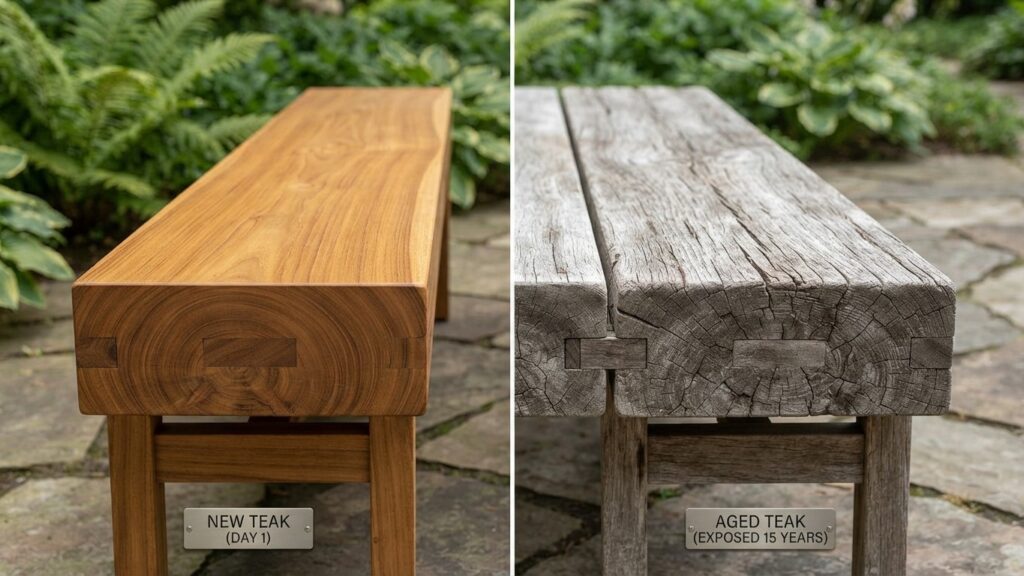
Teak carries its own protection. Its natural oils make it remarkably resistant to moisture, rot and insects, which is why it has long been the wood of boat decks and outdoor furniture. Left alone, it weathers from honey to a soft silver-gray. Oiled regularly, it holds its warmth. Both are beautiful, and the choice is yours.
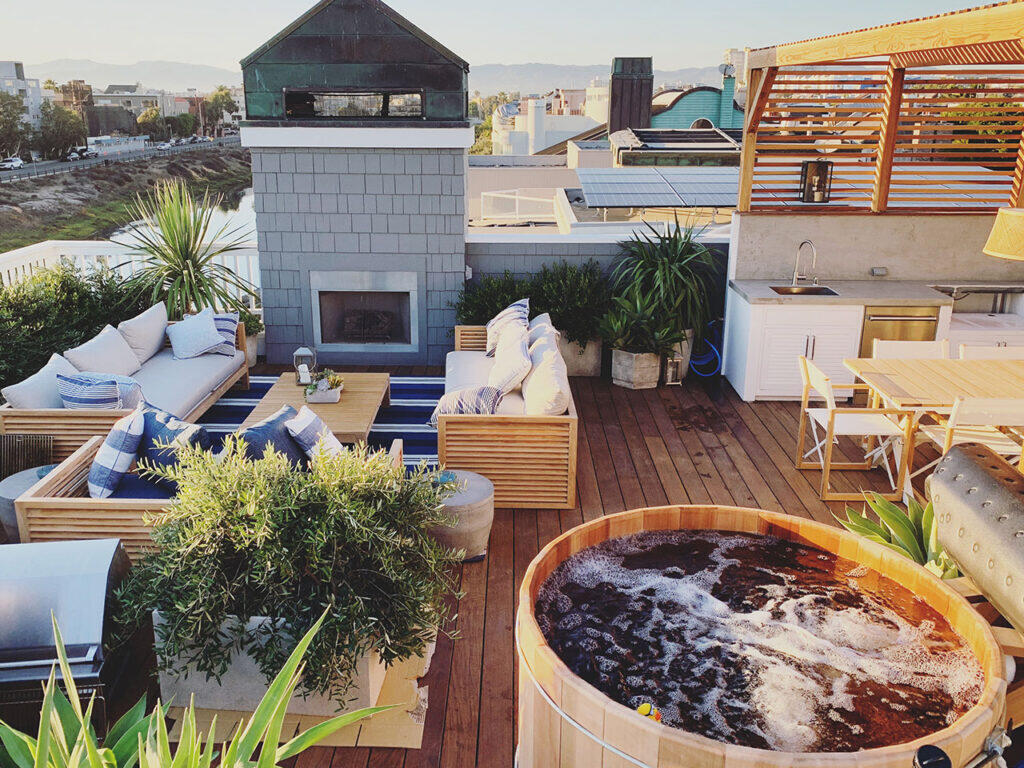
Outdoors, we specify it for decking, exterior doors, window frames and screens. Indoors, it earns its place anywhere water is part of daily life: shower floors, benches, bath surrounds and vanities.
Copper
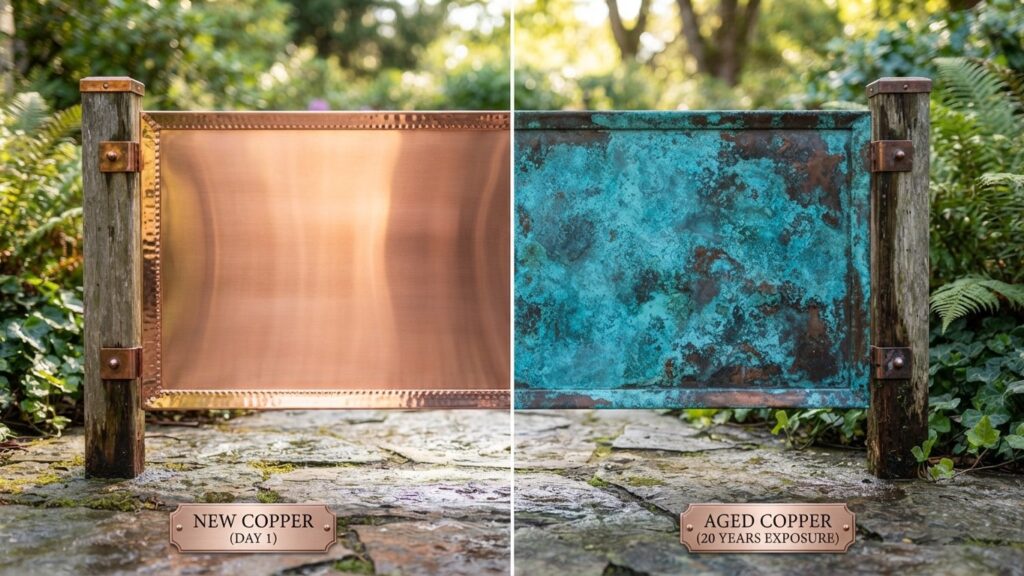
Copper begins as a bright penny and rarely stays that way. Over the years it darkens to brown, then slowly turns toward the blue-green of verdigris, a patina that protects the metal underneath. Properly installed, copper gutters and downspouts can serve a house for generations, which makes them one of the best long-term investments on the roof.
Beyond gutters, we use it for flashing, standing-seam roofing, chimney caps, range hoods, sinks and hardware. As with Corten, runoff can mark lighter materials below, so we plan where the water goes.
Reclaimed Wood
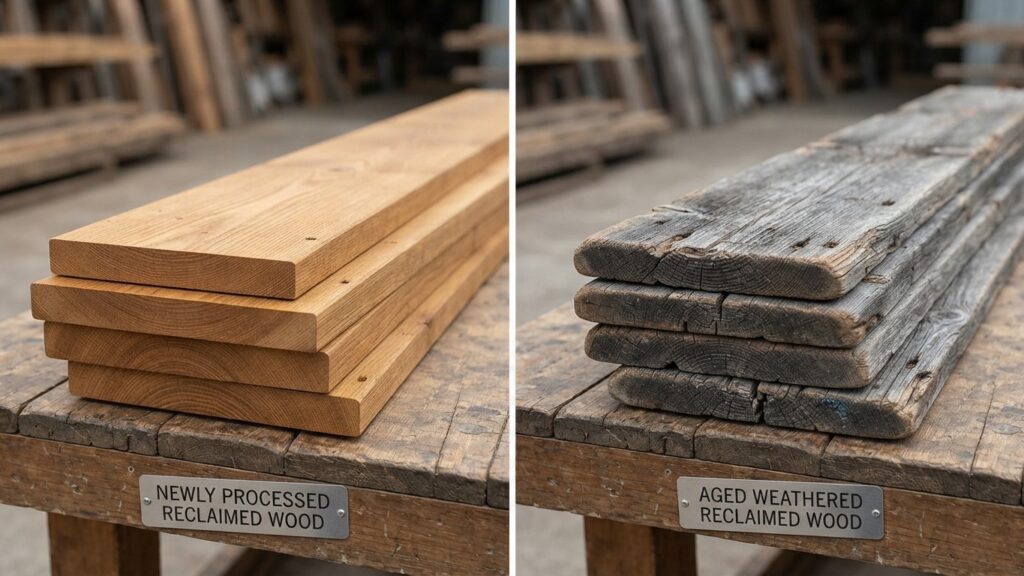
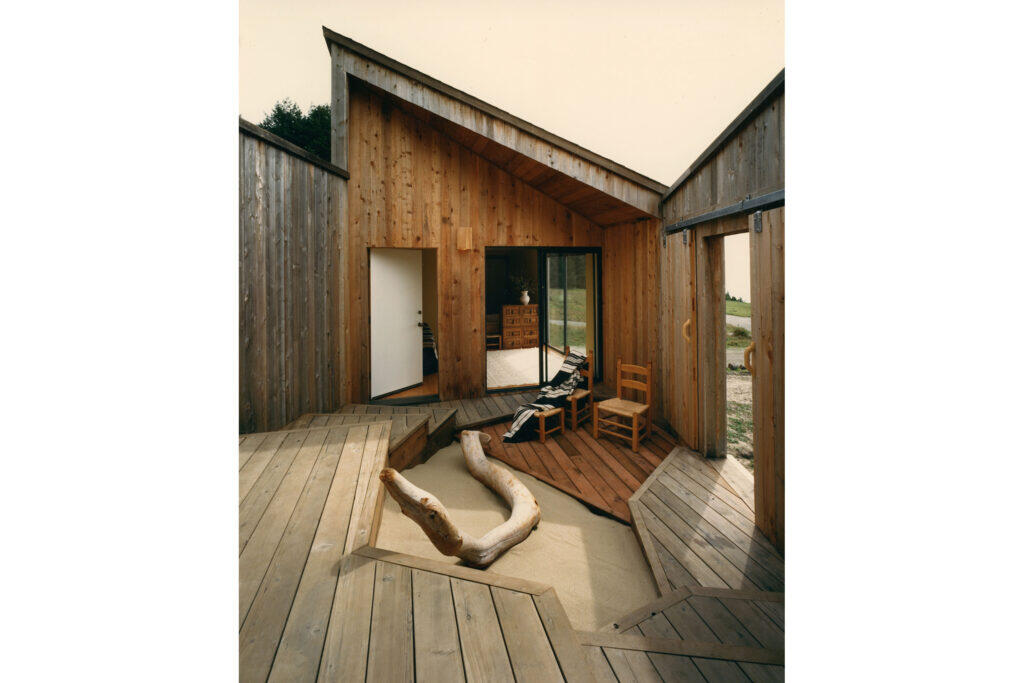
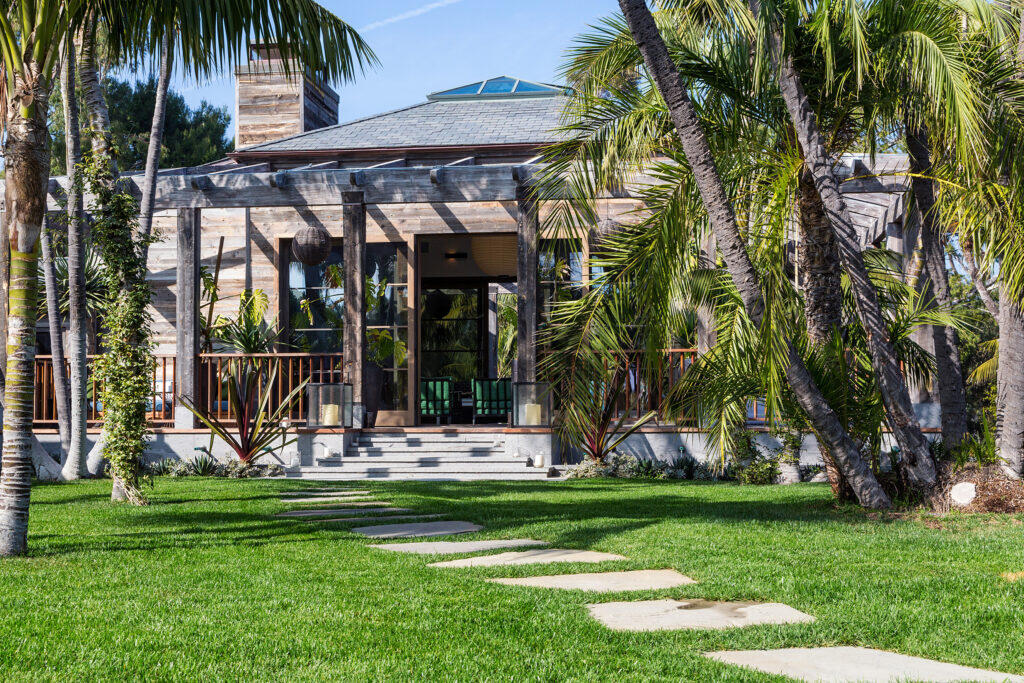
Reclaimed wood often comes from old-growth timber, with tighter grain and greater stability than much of what is milled today. It has already spent decades expanding, contracting and settling, and it carries a history no new board can imitate: nail holes, saw marks, the soft tone of long use.
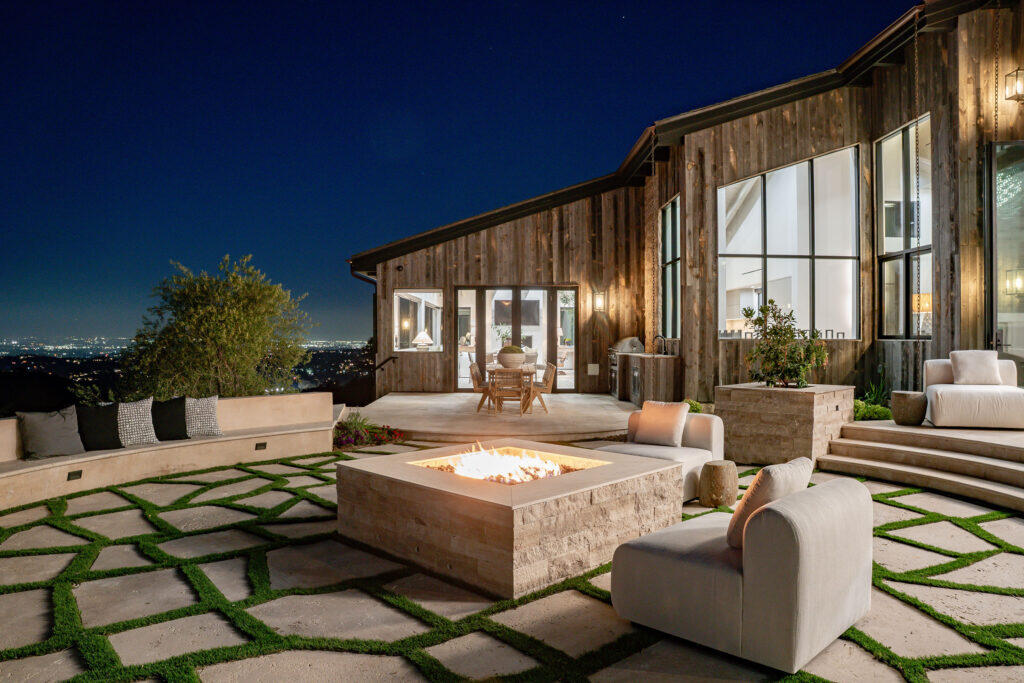
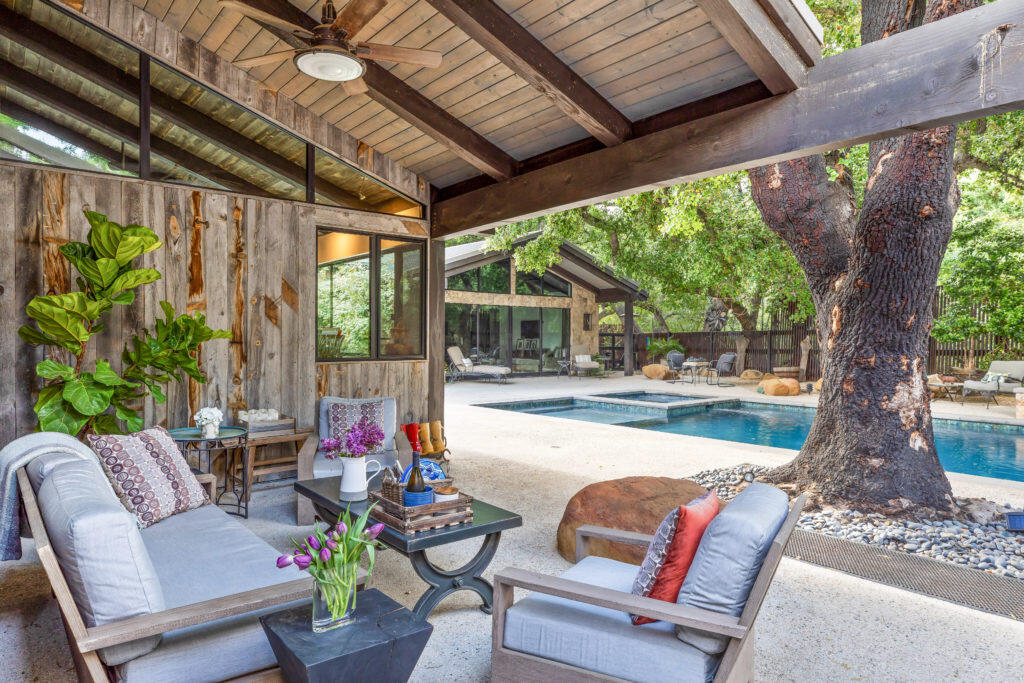
On the exterior it makes a handsome siding when it is well sealed and carefully detailed. Inside, it is just as at home in cabinetry, ceiling beams, mantels, paneling and built-ins. We always ask where it came from and how it has been treated, because the right source and the right finish make all the difference.
Stone
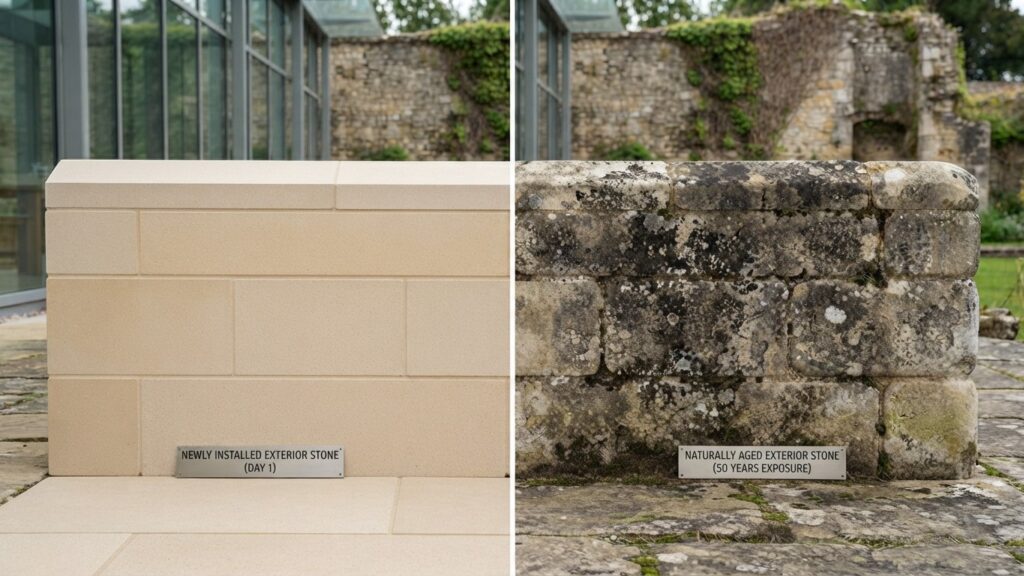
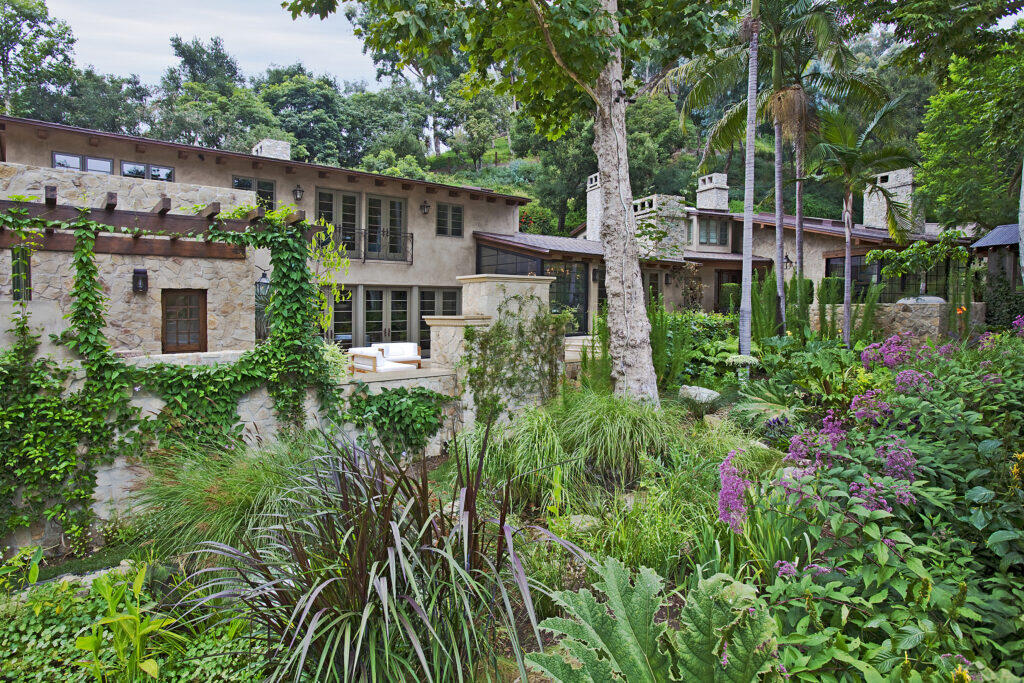
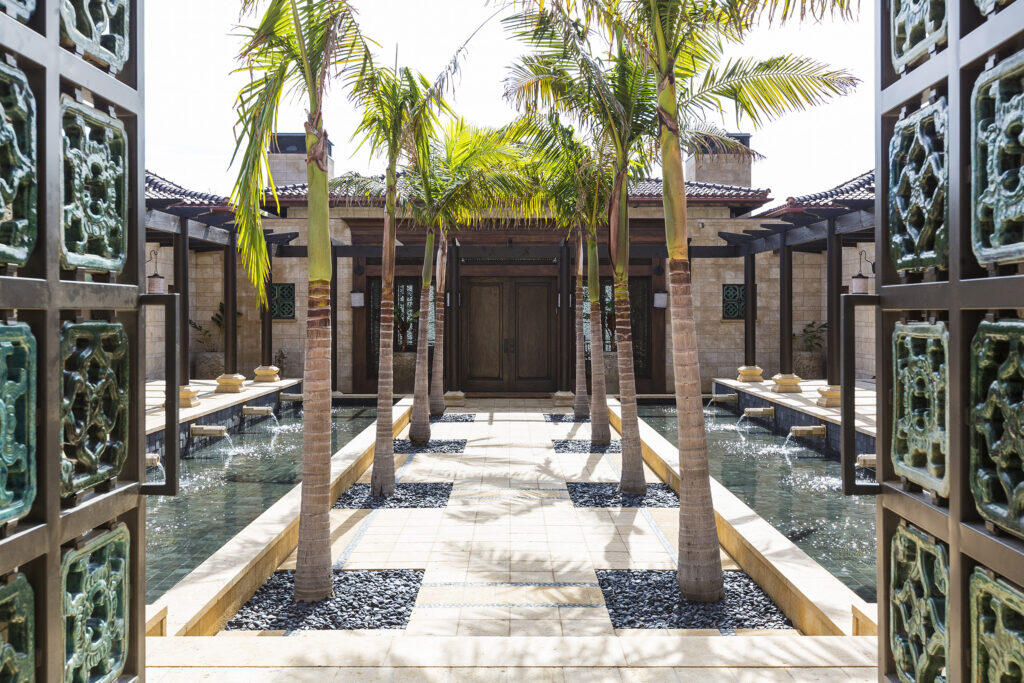
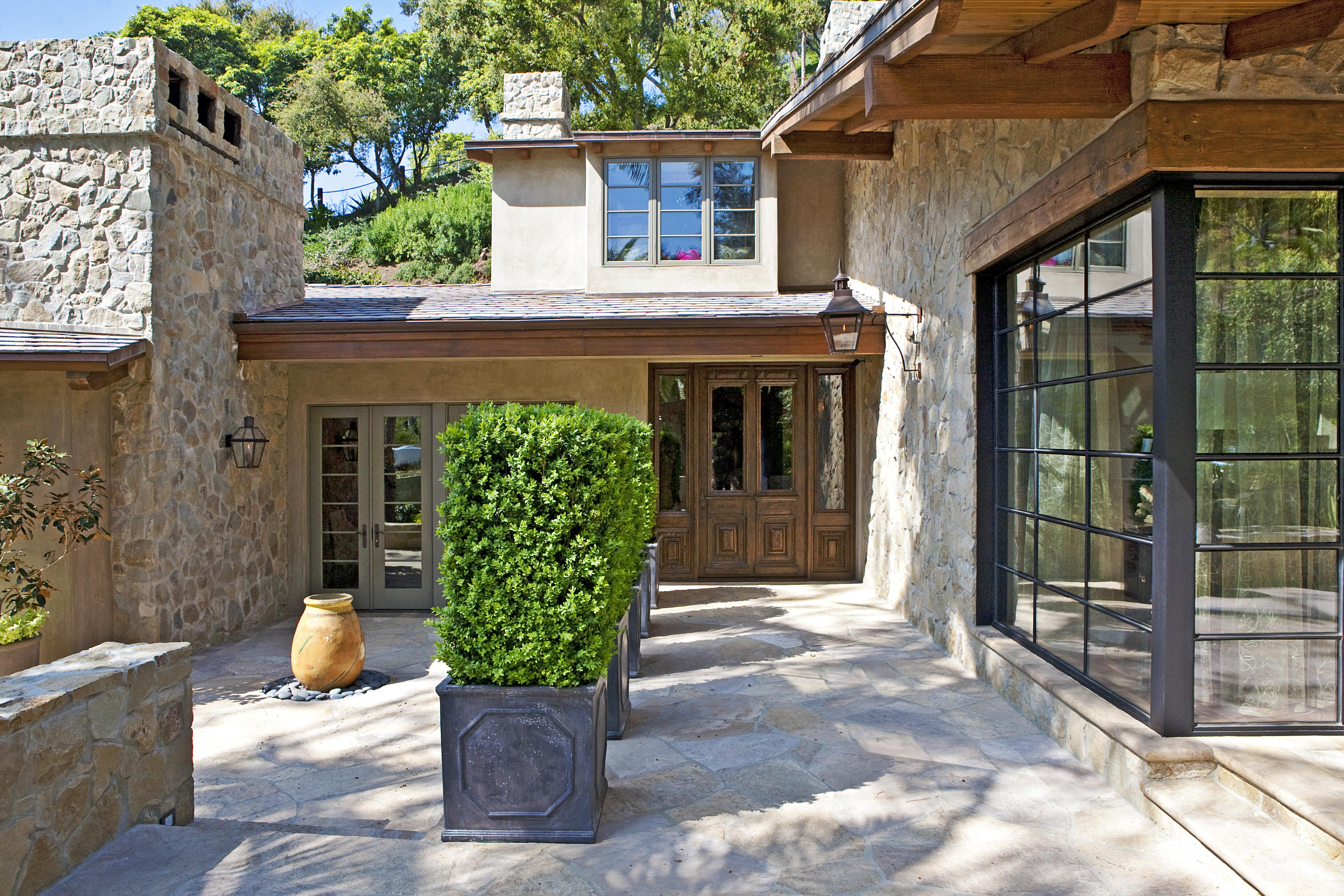
Stone is the measure the others are held against. Buildings made of it are still standing after centuries, and a stone surface that is chipped or worn tends to look more convincing, not less. Honed and leathered finishes age more gracefully than highly polished ones, as they hide the small marks of daily life.
We use it on exterior walls, steps and retaining walls, hearths, flooring, pool decks and coping, and countertops. Each type has its own needs for sealing and care, so we match the stone to the setting and to how the owners live.
Planning for Patina
Choosing materials like these is partly a conversation about expectations. Patina is change, and change is the point. We walk clients through how each material will look at one year, five years and fifteen, ideally with samples that have already weathered.
We also think about how materials meet each other: where copper runoff lands, how Corten sits against pale stone, what happens where wood meets the ground. A good detail lets materials age together instead of marking each other.
Aging well is not the same as neglect. Teak may want an occasional oiling, stone a sealer, reclaimed siding an annual look at its finish. These are small, occasional rituals, far lighter than replacing something that was never meant to last. Many of these materials cost more at the start, but over the life of a house, a material that never needs replacing is often the more economical choice.
What They Have in Common
What these five share is honesty. None of them is hiding behind a coating, and none of them asks to be kept in a state of perfection. They show their age openly and gracefully, and when something does need attention, it can usually be repaired rather than replaced.
That is the idea behind how we choose materials: pick the ones that will keep their character, and let the house grow into them.
In the Work
Discover more from Hayne Architects
Subscribe to get the latest posts sent to your email.
