

30 Sep Over Our Heads: A Quick Guide to Roofing Materials
A roof does more work than any other surface on a house. It carries weather, resists fire, and sets the silhouette people read from the road before they see a single window. It also gets chosen late, and often by default. We would like to make that decision earlier, and on purpose.
This month we have been looking up. Here are four materials we have seen being used, what each is good at, and the kinds of architecture they suit.
Slate
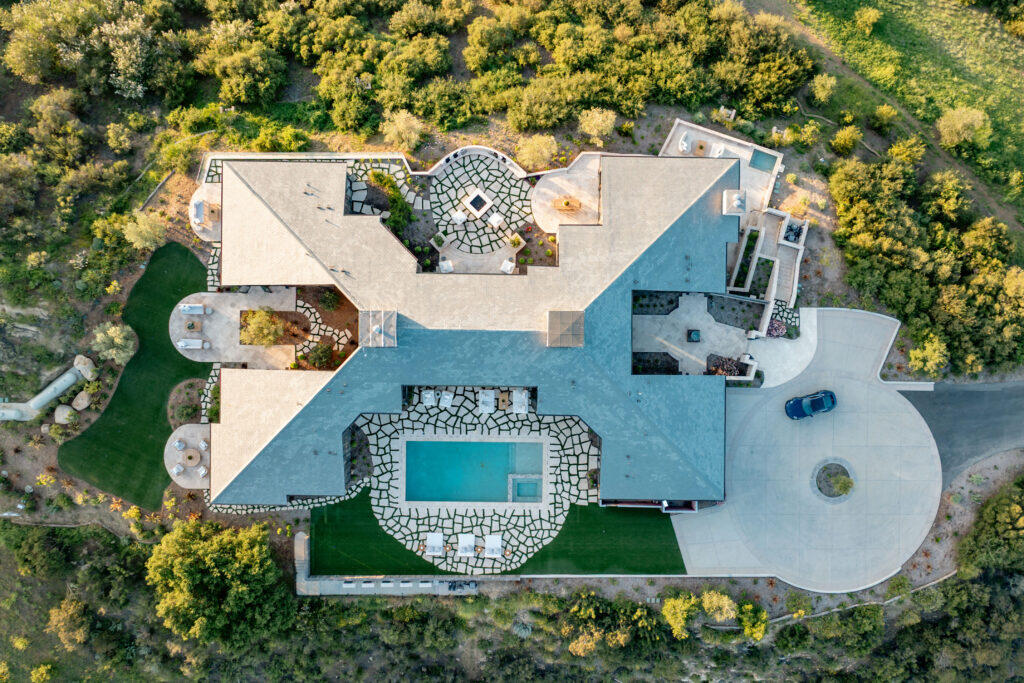
Slate is the long view. It is a natural stone, split into thin layers and laid in overlapping courses, and a well-installed slate roof can outlast the people who commissioned it, often a century or more. It is noncombustible, resists moisture, and weathers gracefully rather than aging badly.
The trade-off is weight. Slate is far heavier than most alternatives, so the structure has to be designed for it from the start, not retrofitted. It is also the most demanding material to install and repair.
Stylistically, slate belongs with architecture that values permanence: French Country, Tudor and English Manor, Georgian, and traditional estate homes. Its cool, layered tones give steep rooflines a depth that few materials can match.
Standing Seam Metal
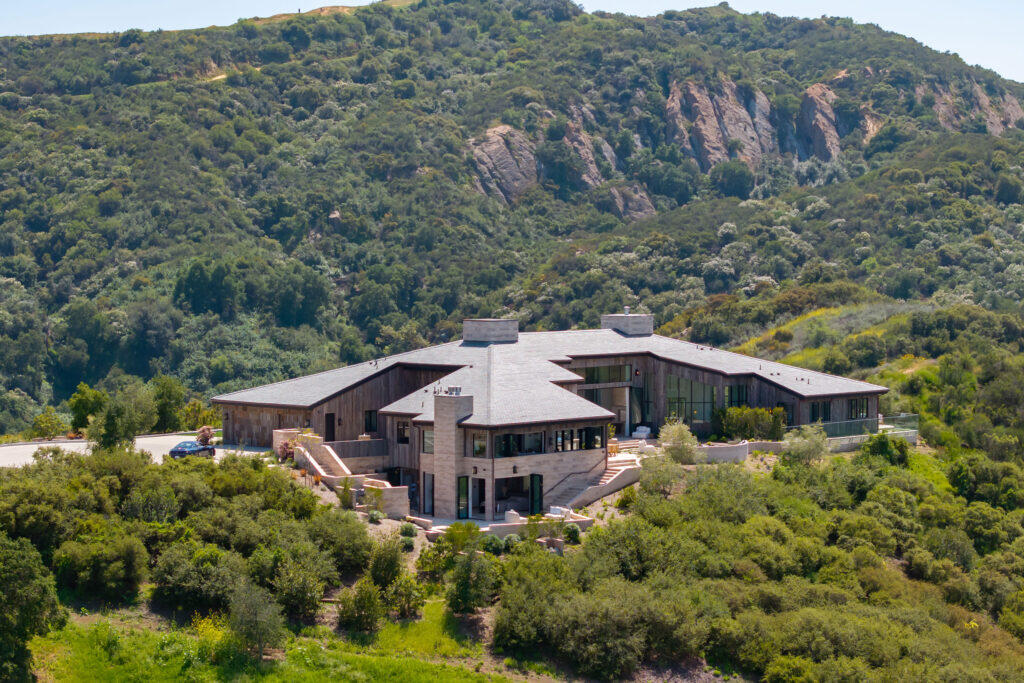
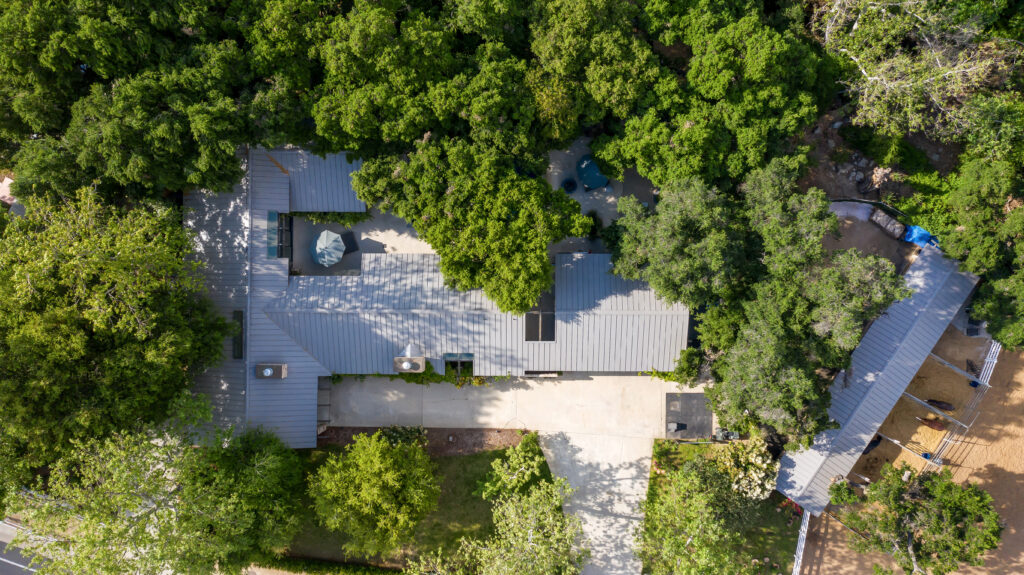
Standing seam is the modernist’s roof. Long panels lock together at raised seams with concealed fasteners, which gives you crisp, continuous lines and very few places for water to find a way in. It is light, durable (typically 40 to 70 years), and available in steel, aluminum, zinc, and copper, each with its own finish and aging behavior.
Metal is a natural fit for Modern and Contemporary work, Modern Farmhouse, and low-slope or shed roofs where a clean plane matters. In coastal settings, the choice of metal and coating matters a great deal. Salt air is unforgiving, so we specify with the site in mind. It also performs well in fire-prone areas, which is a real consideration on the hillsides and canyons we work in.
Asphalt Shingle
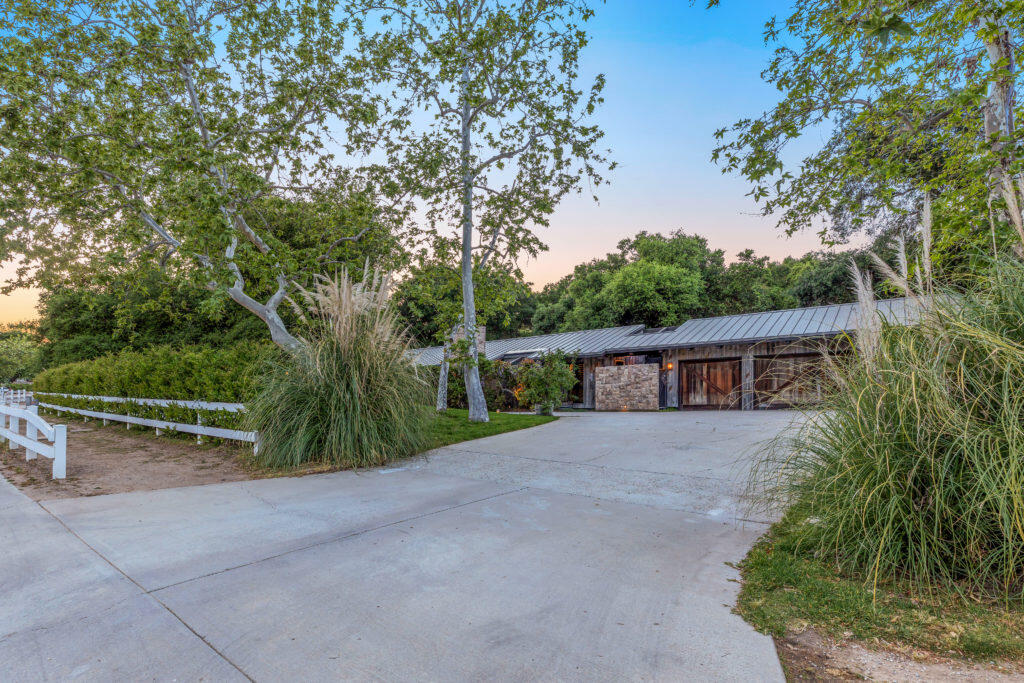
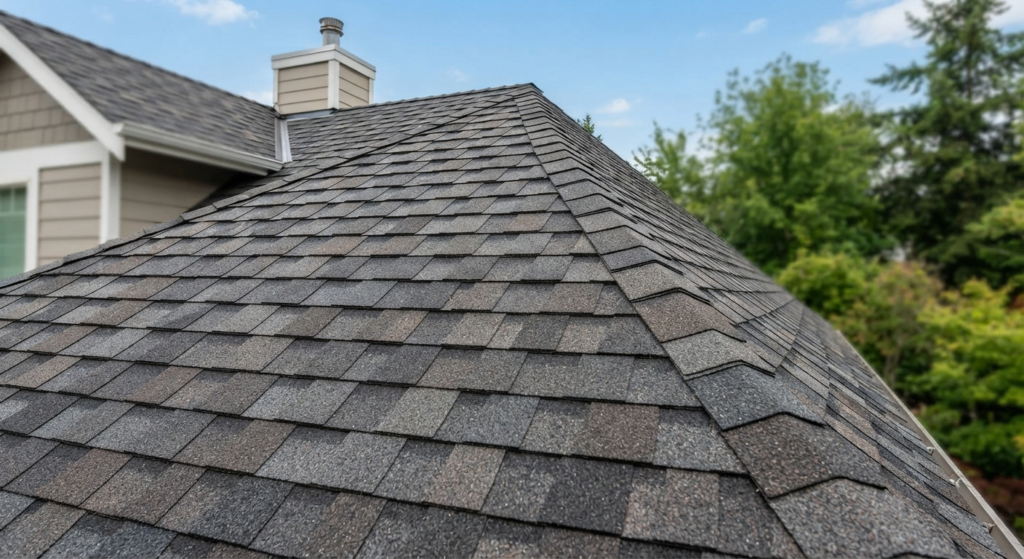
Asphalt gets overlooked in design circles, which is a mistake. Choosing it well is a skill. Modern architectural (laminated) shingles have real dimension, with layered profiles that throw shadow and read as textured rather than flat. They are versatile, cost-effective, and typically last 20 to 30 years.
They suit the houses many of us grew up around: Ranch, Craftsman, Cape Cod, and Traditional homes. Where the architecture is about warmth and familiarity rather than statement, asphalt lets the rest of the house lead. Color selection is the whole game here. A muted, slightly variegated tone almost always beats a flat one.
Clay Tile
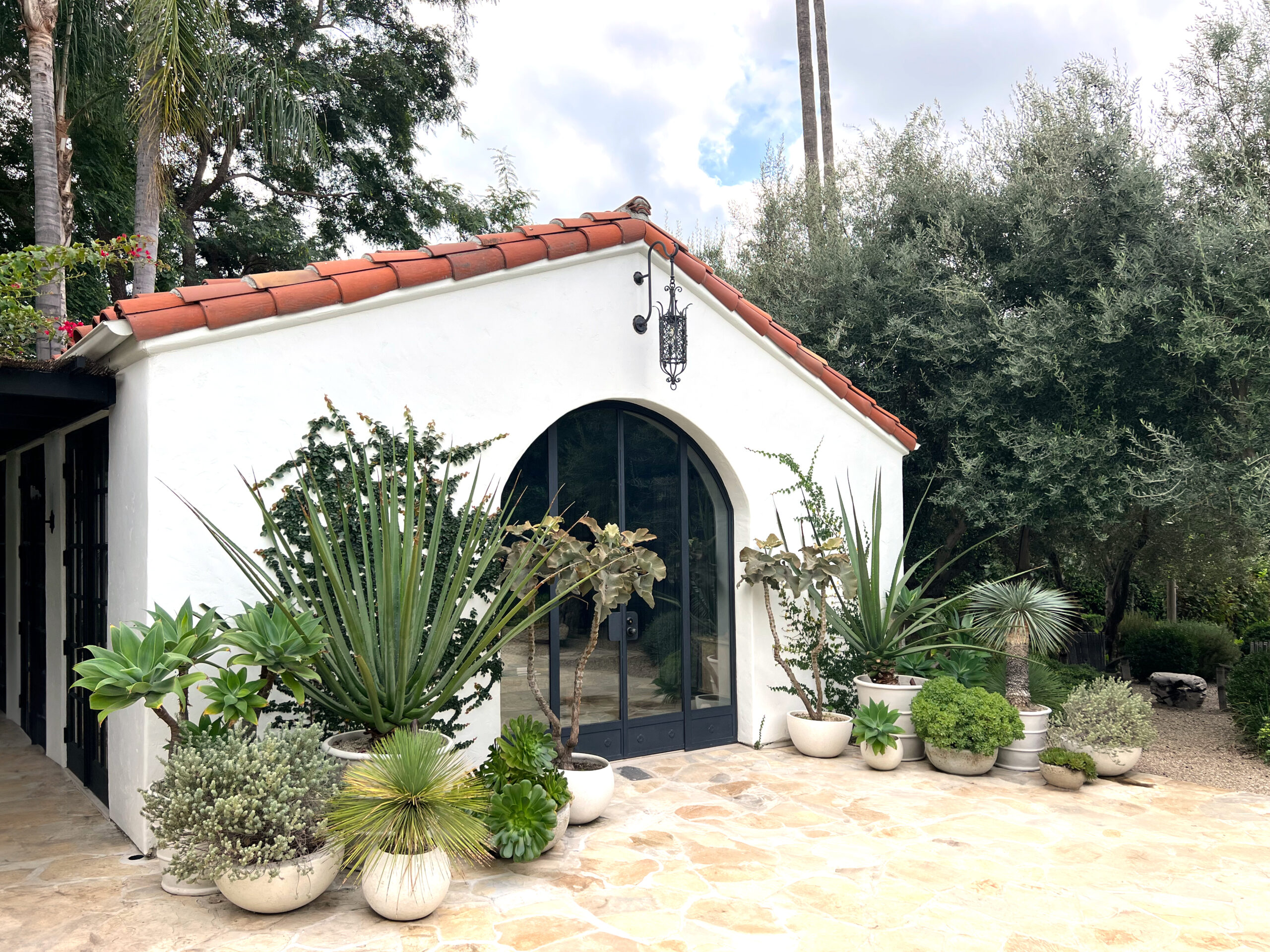
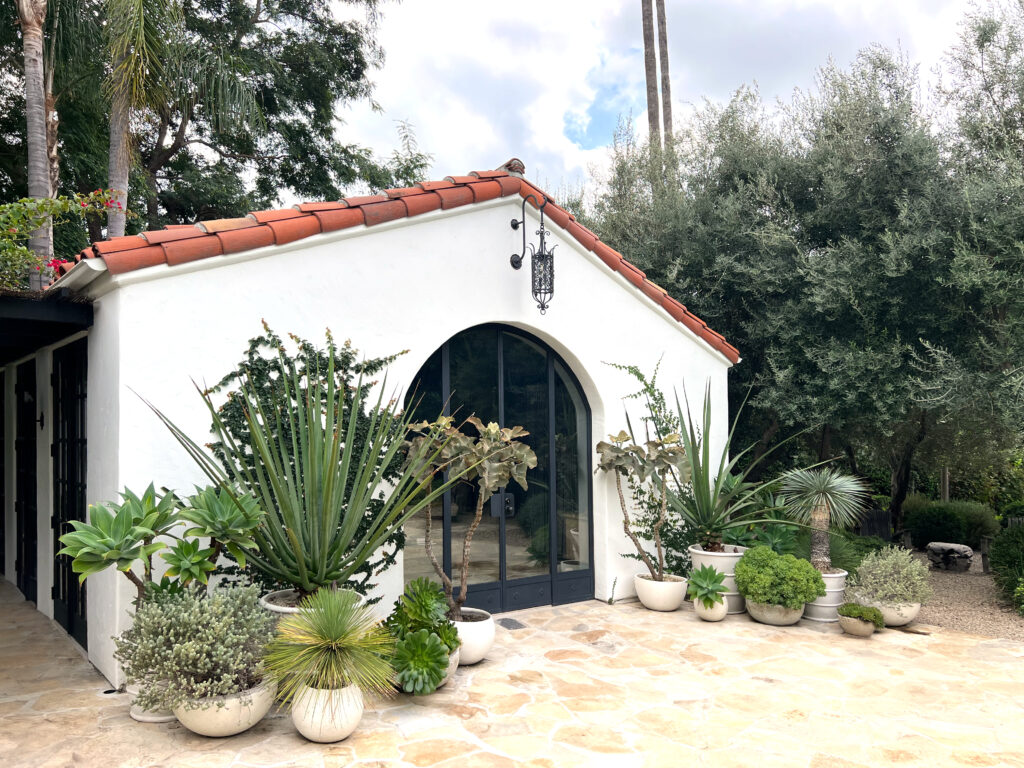
Clay tile is fired earth, and it looks like it. Barrel, S-tile, and flat profiles give a roof sculptural rhythm, and the color, in warm terracottas and sun-faded ochres, deepens as it ages. It is noncombustible, handles heat well, and can last 50 to 100 years.
Like slate, it is heavy and needs structural planning, and it is brittle underfoot, so maintenance access is worth thinking about. Its home is Spanish Colonial Revival, Mediterranean, Mission, and Italian Villa architecture. In Southern California it also has deep regional roots. It belongs to this landscape in a way few materials do.
How We Choose
We start with the architecture and work outward. Style sets the shortlist. Then three questions narrow it:
- Can the framing carry it? Slate and clay must be planned for early.
- For our region, a Class A assembly is the baseline. Slate, clay, and metal are noncombustible, and modern fiberglass-based asphalt shingles can achieve the rating as part of a proper assembly.
- Site and climate. Salt air, heat, wind, and slope all change the answer.
A good roof rarely announces itself. It settles the proportions of the house, protects everything beneath it, and gets better with time. That is worth deciding carefully.
If you are planning a new home or a rebuild and want to talk through materials, we would love to hear from you.
Discover more from Hayne Architects
Subscribe to get the latest posts sent to your email.
