

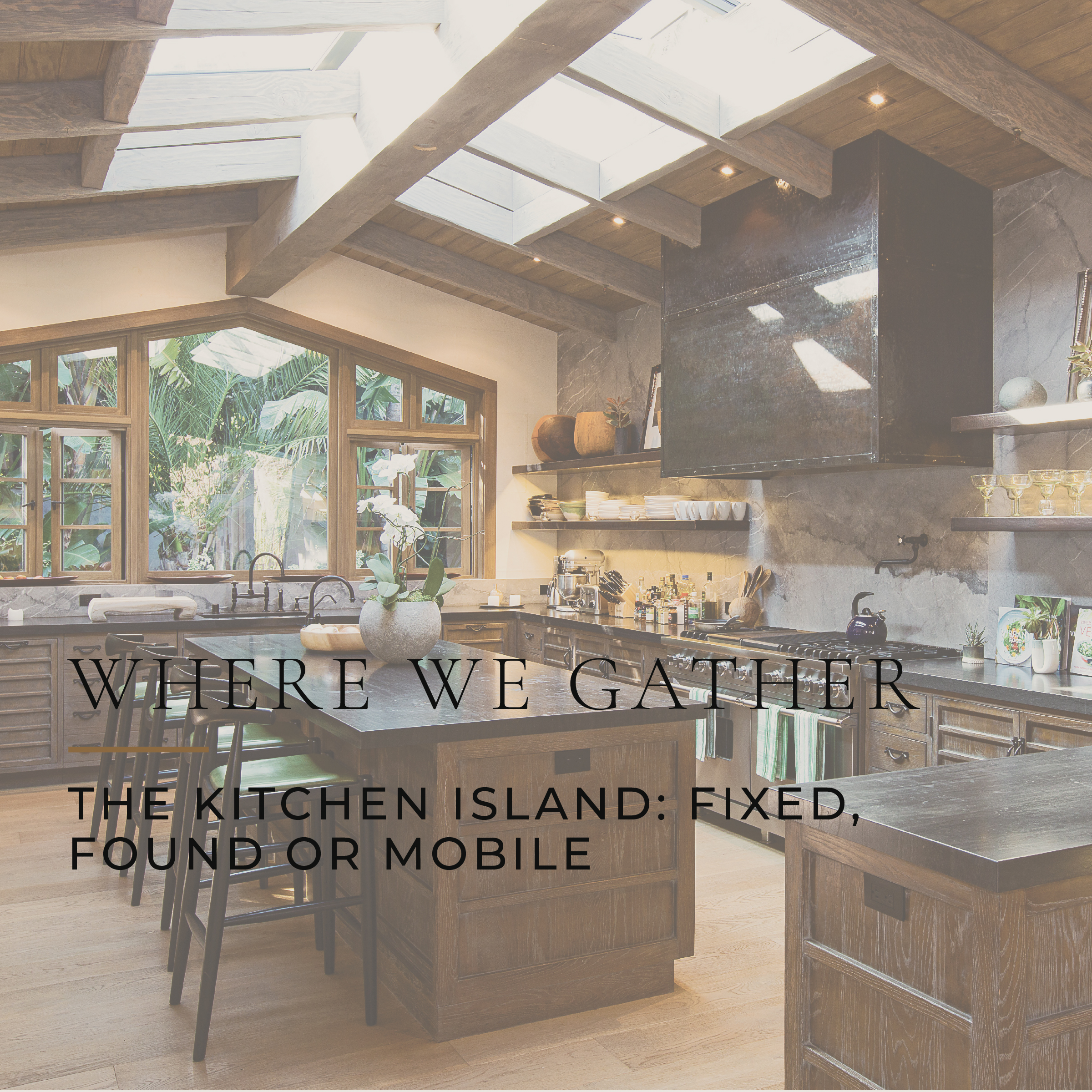
15 Jul The Kitchen Island: Fixed, Found or Mobile
Every kitchen has a center of gravity. More often than not, it’s the island — the surface where coffee gets made and homework gets finished, where a glass of wine gets poured while dinner comes together, where guests migrate no matter how many other seating options a house offers. The island is rarely just a countertop. It’s a decision about how a family wants to gather, made in wood and stone before anyone moves in.
That decision can take a few different shapes. Sometimes it means building the island from the ground up, engineered to the room. Sometimes it means finding a piece with history already in it and letting that history do the work. And sometimes — our favorite kind of problem — it means finding an object and giving it just enough of a new life to belong.
Custom: Built to the Room
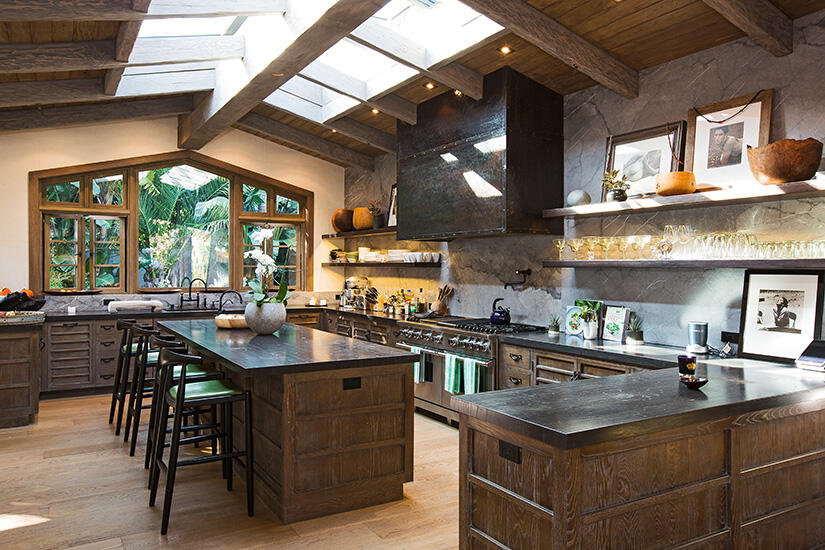
At Cliffside Drive, the island isn’t a piece of furniture so much as it is the room’s spine. Dark oak paneling and a honed stone top were drawn to match the scale of the skylight above and the weight of the blackened steel hood across from it — every proportion considered against the next. This is what a custom island offers that nothing off-the-shelf ever quite can: seating for six without crowding the range, storage sized to actual pots and platters, a waterfall edge that lands exactly where the light does. It’s the option for a kitchen that has one shot to get its geometry right.
Found: Left As It Was Made
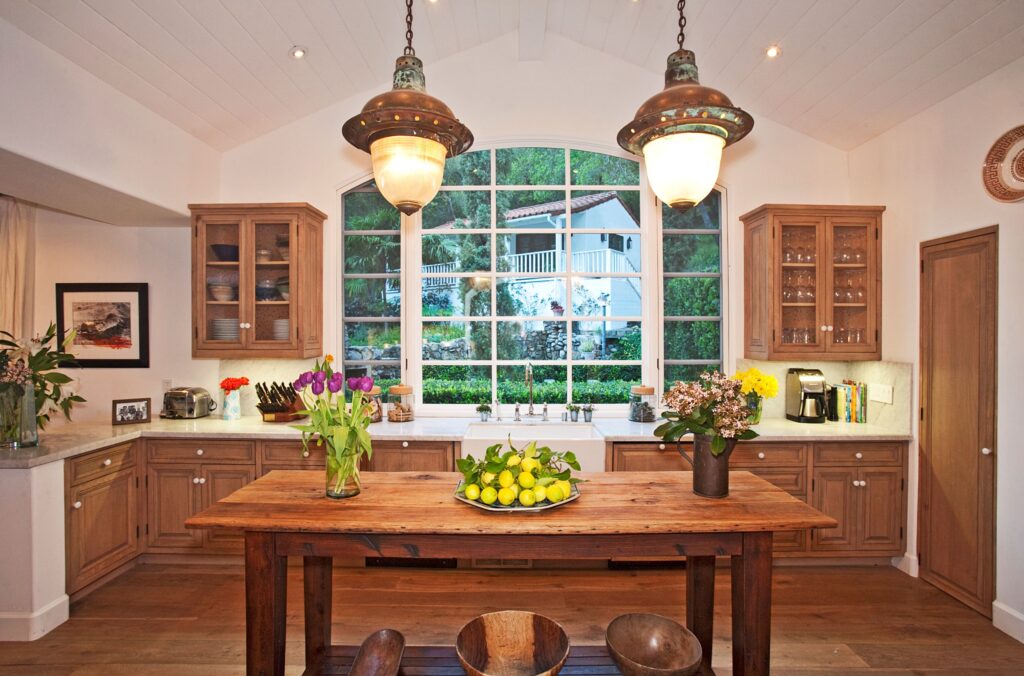
At Mulholland Ranch, the island is a reclaimed farm table, doing the job it might have done a hundred years ago on a different kitchen floor. Nothing about it was resized or refinished to fit the room. The mismatch is the point — a worn, warm surface set against cleaner cabinetry, proof that a kitchen doesn’t have to be uniform to feel resolved. A found piece like this brings a kind of gravity a new build can’t fake. It’s already lived a life. All it has to do is keep living it, a few feet to the left.
Custom: Built to be Mobile
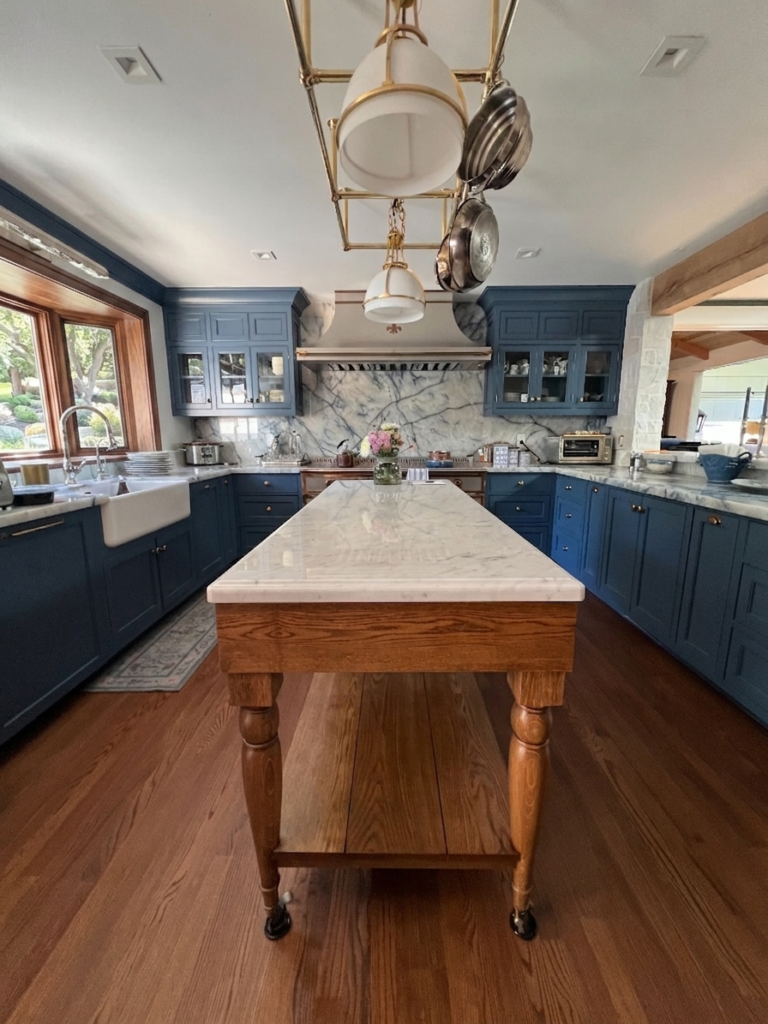
And then there’s the third path, a custom piece that isn’t built into the space but was still designed for it. At Gardener Ranch, the island was thought to be a found piece that would be modified to transform into a kitchen island. After shopping around, the client decided to get a custom built kitchen island and have it look like it was a piece of furniture previously. We designed the kitchen island to fit in the space and Tony Farmer made it come to life. Adding wheels at the bottom allows this piece to become more than the kitchen island, it can be moved for more space in the Kitchen or help as a serving table in the Dinning Room!
Choosing Between Them
None of these approaches is more “correct” than the others. The right one depends on what a kitchen is asking for — precision, patina, or a bit of both. What they share is the same instinct: the island should feel like it was arrived at on purpose, whether that meant drawing it from nothing or noticing that the right piece was already out there, waiting for a marble top and a second act.
Discover more from Hayne Architects
Subscribe to get the latest posts sent to your email.
