

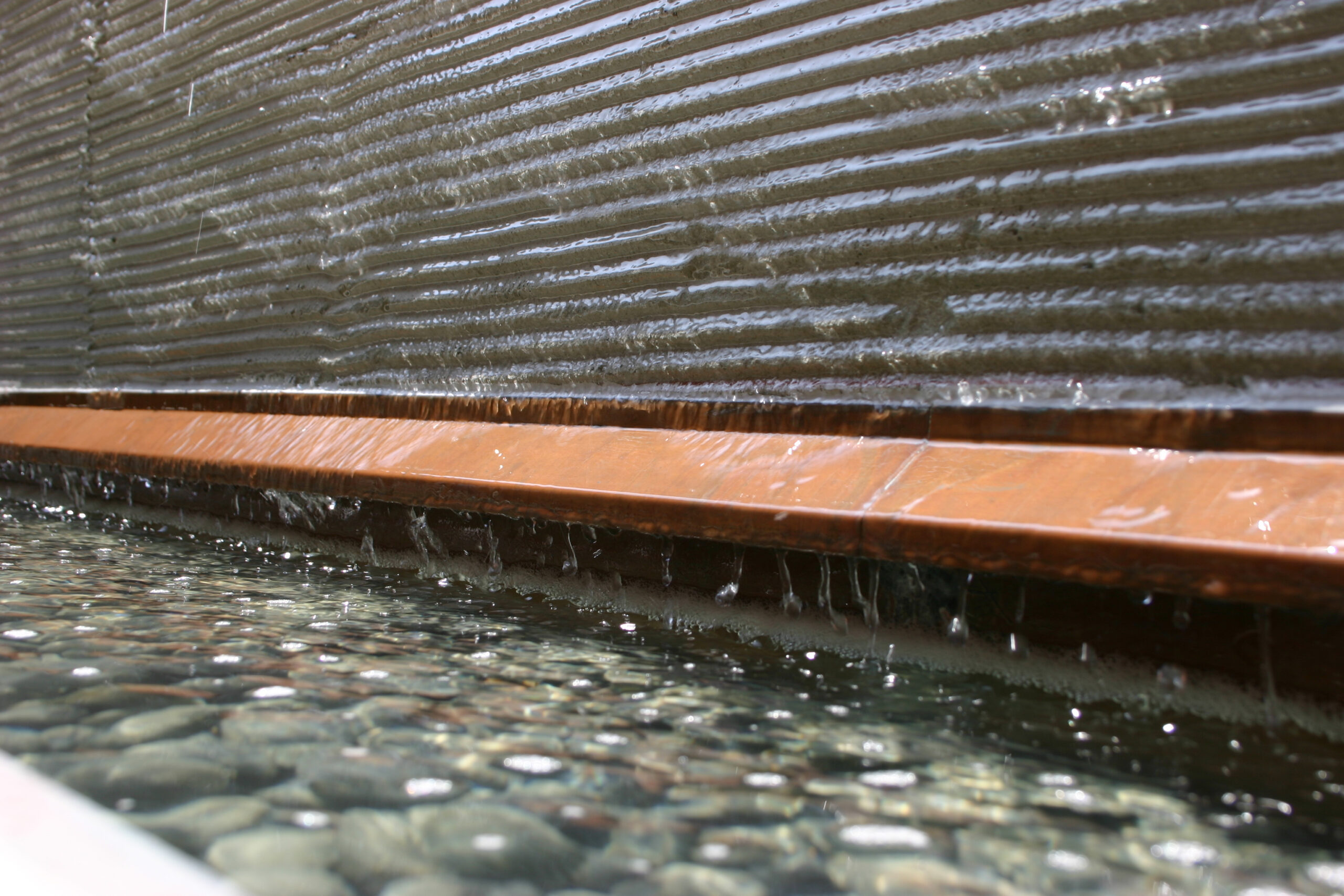
05 Aug Water as an Organizing Element
Charles Moore wrote his doctoral thesis on water in architecture. He understood it as a spatial force — something that could order a plan the way a wall does, or a column does. Not a feature to be added at the end. A tool to be drawn with from the start.
We learned that lesson early, and we have never stopped using it.
As a threshold
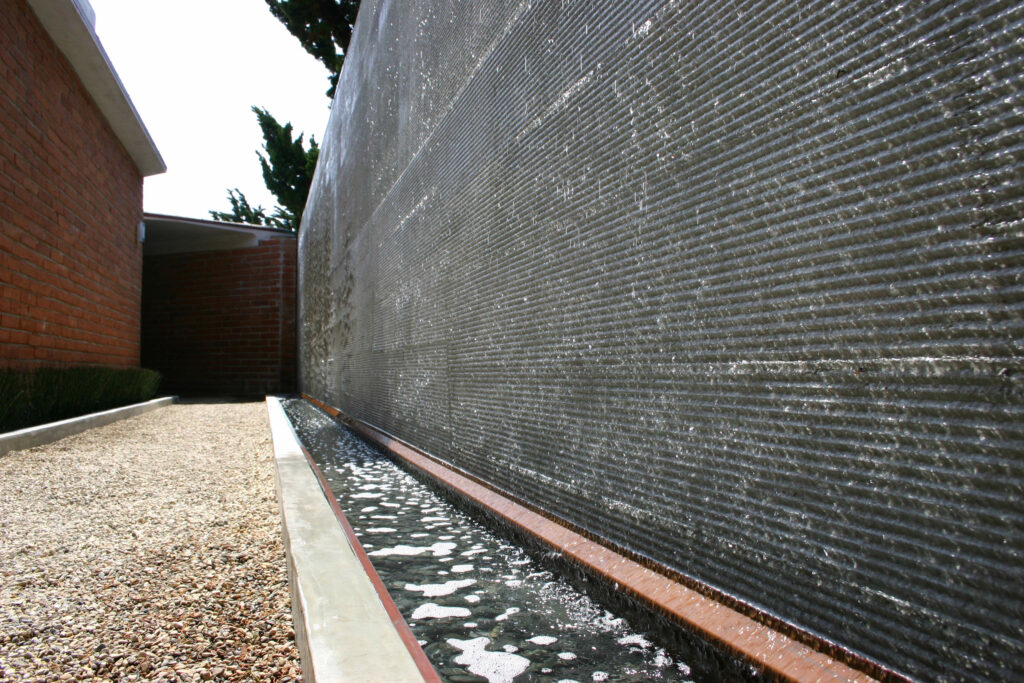
At Encinal Bluff, a reeded concrete water wall runs the length of the entry sequence. Before a visitor reaches the door, they pass alongside falling water — and the arrival announces itself before the house does. This is not decoration at the entry. It is the entry. The sound and the movement tell you that you have left one condition and entered another, well before your hand reaches the door.
As procession
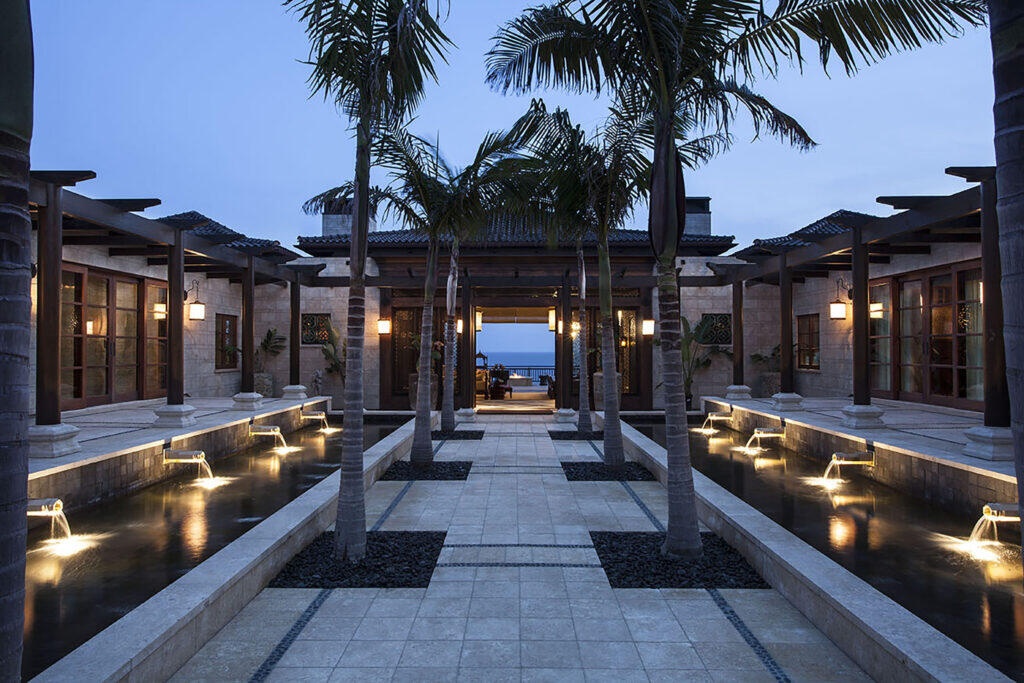
At the Malibu Bluff Estate, reflecting pools flank the walkway between pavilions, holding a straight line of movement before the Pacific ever comes into view. The water does not compete with the ocean beyond it. It prepares you for it — pacing the walk, keeping the eye low and steady until the view is ready to be given.
As a room’s edge
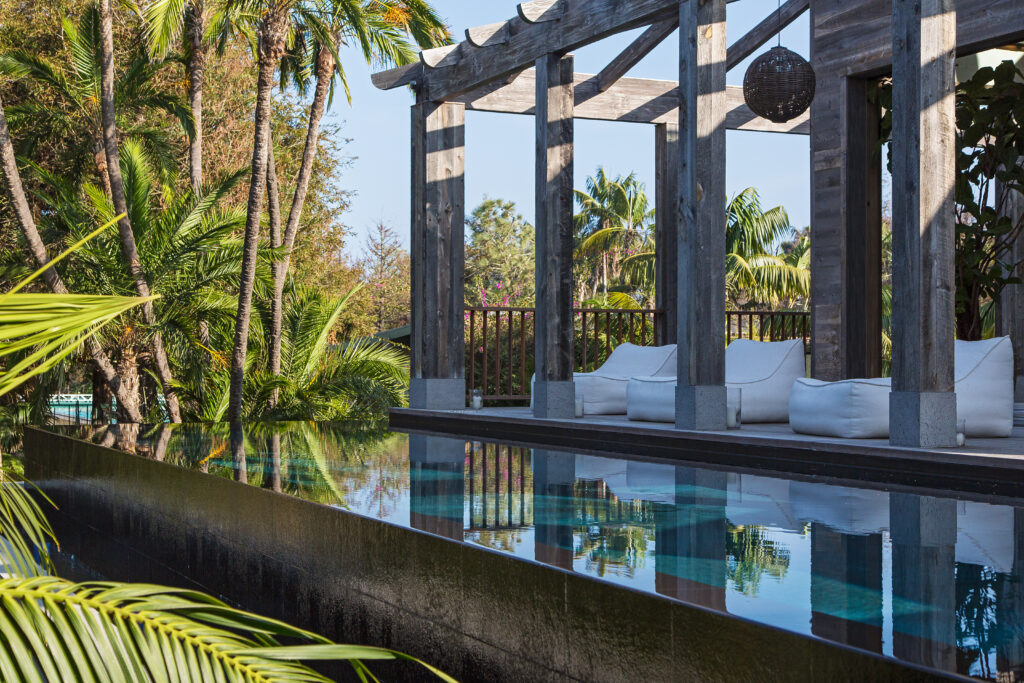
At Cliffside, the Living Pavilion is bounded on three sides by water. This is not a view corridor. It is a room, and water is what defines its edges — the way a wall would, if a wall were called for. The pool does the work of enclosure without a single vertical surface.
As a buffer
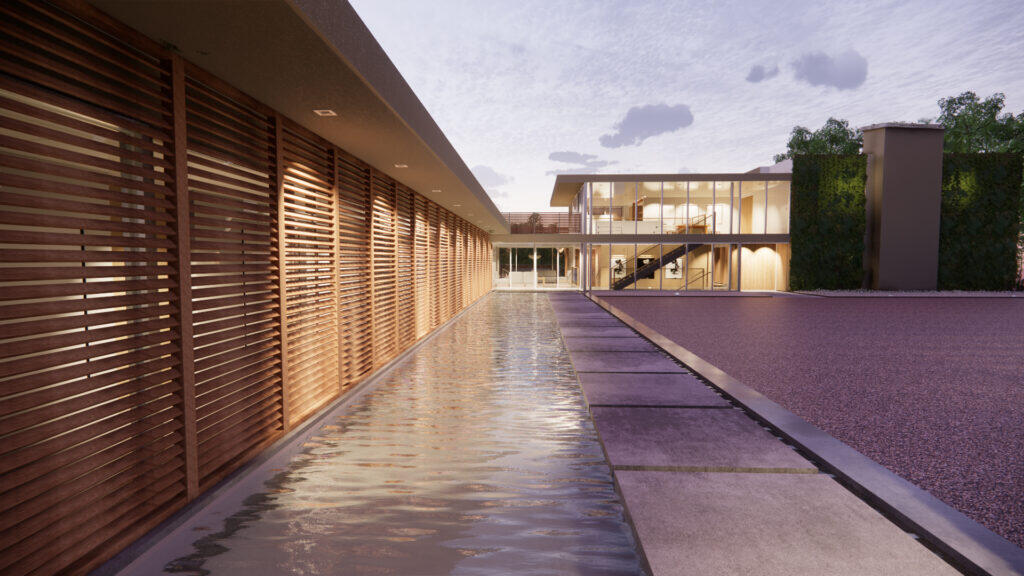
At OTC 2.0, a reflecting pool runs the full length of the bedroom wing, setting a quiet boundary between the private rooms and the driveway courtyard beyond. No fence. No hedge. Just water, doing the work of separating what is shared from what is not.
As the spine of a plan
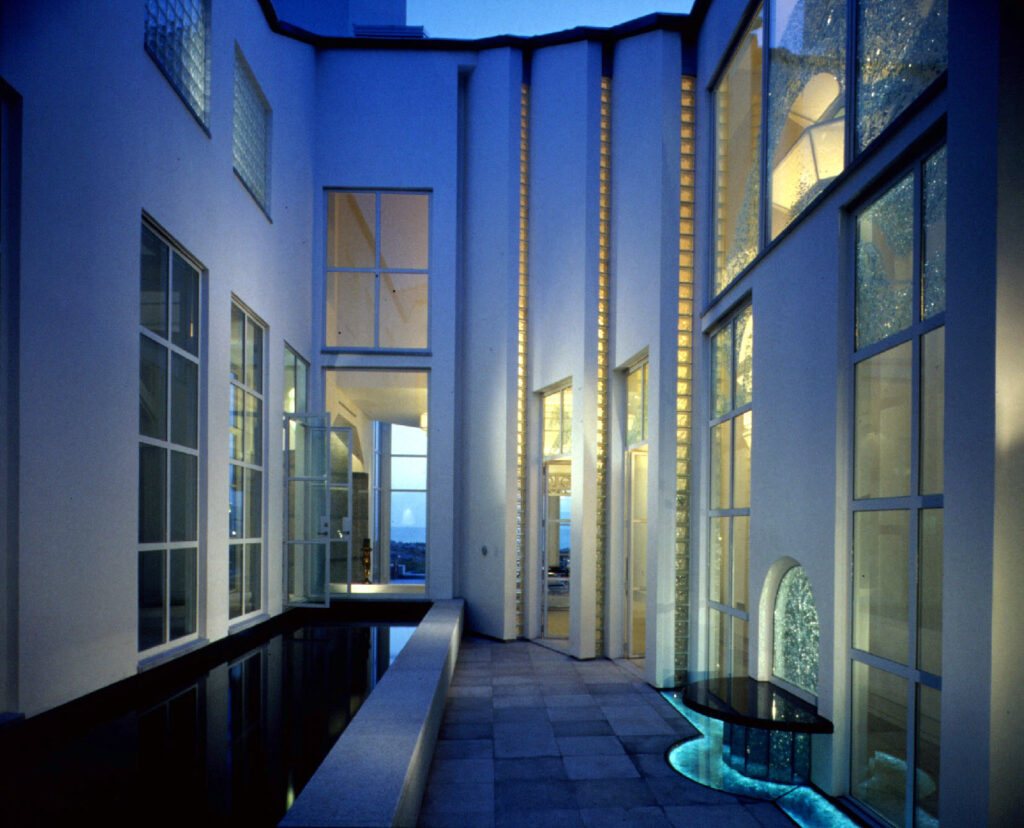
At Broadbeach, published in Architectural Digest in 1991, the house faces the Pacific — but the lap pool at its center does the real work. It is the spine the entire plan organizes around, indoors and out, long before the ocean is the point.
Five houses. Five different jobs for the same element. What holds them together is not a style of pool or a type of finish — it is the conviction that water is never incidental. It is drawn into the plan the same way a wall is: to define what is private and what is shared, to pace an arrival, to hold a room’s edges, to give a plan its center.
The land speaks first, and on this coastline, water is often how it finishes the sentence.
Tags: #WaterInArchitecture #MalibuArchitect #HayneArchitects #DeceptivelySimple #SiteSpecificDesign
Discover more from Hayne Architects
Subscribe to get the latest posts sent to your email.
